Category: Resources

  • FCRP Part 2

    In Part 2 of Faith Community Reintegration Projects 101, I want to look at where the process of engagement begins and what the significant steps of the process are—including how volunteers can get involved inside the institutions and help build that “bridge” of reintegration from the institution to their faith community. (Missed Part 1? Read it here.)

    Under Better Life’s contract with Correctional Service of Canada (CSC; in effect to 2025), our work with offenders begins as an individual becomes eligible for parole and one of the following occurs:

    1. A Corrections Site Chaplain or faith-specific chaplain contacts us with a referral.

      The majority of individuals who invite Better Life to provide support for their reintegration back into the community are Christian. However, under the CSC contract, Better Life provides support for individuals from all faith backgrounds.

      This means we may be contacted by chaplains representing any faiths asking if we would meet with an individual to discuss how Better Life can provide support.
    2. Individuals becoming eligible for parole may contact Better Life personally.

      In this case, an offender may have come across information about us independently or have been referred through another offender who has benefited from their experience with Better Life.

    After the initial point of contact, a Better Life Chaplain has an interview with the individual eligible for parole to determine if Better Life is the organization that can provide them with the best possible faith reintegration experience.

    Better Life is part of a wider network of reintegration agencies, and our goal is to provide the most helpful pathway possible for an individual.

    That may mean that we get to work directly with an individual to develop their Reintegration Pathway, or if there is an agency that can provide more resources and support then we can offer, we will refer them.

    For instance, Circles of Support and Accountability (CoSA) is an organization that specializes in working with those who have an index offence of a sexual nature. Research (Wilson, Cortoni and McWhinnie, 2009) demonstrates that sexual re-offending rates for men who participate in CoSA are 80% lower than for men who do not participate in CoSA.

    Since our priority is to provide the best possible opportunity for faith community reintegration, our commitment is to always have an offender’s best interest at heart—whether that means they have a relationship with Better Life or are better served by another agency, in which case we will help connect them.

    Additionally, Better Life’s Organizational Purpose goes beyond the responsibilities specified in our contract with Corrections Canada.

    Our staff/chaplains fulfill CSC’s FCRP (Faith Community Reintegration Projects) contractual statement of work. However—and this is where so much opportunity for valuable and meaningful involvement lies—Better Life is also comprised of volunteers.

    Volunteers work within the Institutions in support of Site Chaplains—the resident chaplains who provide support at individual Corrections Institutions.

    Volunteers may be involved in offering training programs for offenders such as Alpha, Purpose Driven Life, and Real Life Discipleship, to name a few options. They may be a mentor to a specific offender. They may provide a listening ear, or meet with an offender coming up to parole to help establish a relationship with the faith community the offender will be integrating into.

    The role of the volunteer is invaluable and often provides the assurance to an individual coming up to parole that there is hope. Over and over again we experience and hear feedback that one of the primary and essential ingredients is relationship, relationship, relationship.

    Better Life is deeply grateful for our team of volunteers, and works with individuals and their faith communities to ensure security clearance is put in place so that volunteers have access to Corrections Institutes.

    That initial contact of a volunteer with an individual who is coming up to their parole is invaluable in building the “bridge” that leads to healthy reintegration.

    So, to connect the steps in order:

    1. An individual in prison is coming up to parole, and requests the support of or is referred to Better Life.
    2. A Better Life Chaplain has an interview with the offender to both assess whether or not we’re the best partner organization to offer support, but also to begin to engage with the wider network of Corrections members who will be a part of the offender’s Parole Reintegration Plan.
    3. Better Life works with the Site Chaplain, the Institution Parole Officer (IPO), and with others within the Corrections Institution, and may take other steps such as attending a Parole Hearing before the Parole Board, to develop a plan for healthy, successful faith community reintegration.

      Note: while Better Life doesn’t determine outcomes such as which halfway house (CRF, CCC) that an individual will be sent to, we are often invited to the process and may have influence in the best possible halfway home for the individual and their personal needs.
    4. It is at this point—when Better Life has an indication of where an individual will be sent to—that connection with a faith community can begin.

      Our ideal scenario is that we would already have a relationship with a faith community in the area of the halfway house the offender will be sent to and can begin preparing the faith community for the arrival of the individual.

      If we don’t have a pre-existing relationship with a location-appropriate faith community, or if the individual requests a faith community we’re not already connected with, we will reach out on their behalf.

    As you can imagine, the initial welcome and support of a faith community is invaluable in helping a parolee begin to believe that successful reintegration is possible.

    Next month we’re going to look at the essential pieces of the “bridge” provided in that important handoff of an offender from the support of a Better Life Chaplain to volunteer-supported integration into a faith community.

    If you have any questions about volunteering and how to get involved in providing support for an individual’s reintegration, please don’t hesitate to contact our General Director, Adam Wiggins, at adam.betterlife@gmail.com.

  • Faith Community Reintegration 101

    Over the past weeks, I have had many encouraging conversations with individuals and churches about the work of Better Life Integration and Support.

    I’m relatively new to the position of General Director/Lead Chaplain with Better Life and so, like many of you, I am just beginning to discover what the work of Better Life is all about—and what a game-changer it can be for men and women in a Federal Corrections Institute as they come up for parole and look to integrate back into the community. (Federal sentences in Canada are sentences of two years plus a day; otherwise, offenders go into Provincial Institutions.)

    Before I begin defining Faith Community Reintegration Projects (FCRP), I want to provide a brief history:

    Better Life was formed in the early 2000s and motivated by the significant difference helping parolees within the context of a faith community makes.

    Initially, Better Life functioned under Corrections Canada as a Community Chaplaincy, which involves supporting and helping parolees in halfway homes and in the community experience healthy reintegration. This also involves the valuable work of supporting the families of men and women who were incarcerated.

    Many former offenders and their families experienced the care and support of Better Life’s lead chaplain Pascal Bergeron and the team of chaplains who served with him over the years. However, in a summary of the work of Community Chaplaincy, it was noted that the number of parolees to one chaplain was 1000:1 in the greater Toronto area and 650:1 in Metro Vancouver.

    In response to this overwhelming ratio of parolees to chaplains, FCRP’s (Faith Community Reintegration Projects) were developed by Corrections Canada (CSC).

    Rustic bridge across a cascade in a wooded canyon.

    Better Life has the FCRP contract for the Pacific Region (in effect to 2025), which includes Vancouver/Fraser Valley and Victoria/Vancouver Island. There are nine Federal Corrections Institutes in the Region:

    • Fraser Valley Institute (The Only Women’s Facility | Abbotsford)
    • Kent (Maximum Security | Agassiz)
    • Kwikwexwelhp Healing Village (Harrison Mills)
    • Matsqui Institution (Medium Security | Abbotsford)
    • Mission Institutions (2: Minimum & Medium | Mission)
    • Mountain Institution (Medium | Agassiz)
    • Pacific Institution/Regional Treatment Centre (Addiction & Psychiatric Centre | Abbotsford)
    • William Head Institution (Minimum Security | Victoria)

    FCRPs offer a couple of significant benefits:

    Firstly, there is a significant reduction in recidivism when a parolee is connected with a faith community.

    The statistic I’ve heard most often is that a parolee has a 70% likelihood of reoffending (recidivism) if they are not connected with a faith community.

    That’s obviously a huge motivation for connecting offenders of faith to a faith community on their release from prison!

    Secondly—and closely connected—is the importance of the faith community in the healthy reintegration of a parolee.

    In other words, while Better Life Chaplains and other FCRP Chaplains all across Canada work actively to provide care and support to men and women who request it within a variety of different contexts and phases of their experience, the contractually mandated work of Better Life and related organizations is specifically to provide a “bridge” from an offender’s time in a Corrections Institution to a faith community.

    A faith community that welcomes and provides a growth pathway and mentorship for a parolee is the best environment that a parolee can experience for healthy reintegration back into their community and toward become a contributing member of their community.

    Better Life as an organization has a fantastic team of chaplains and volunteers who invest deeply in the men and women who reach out to us looking to connect with a faith community as they come out of the corrections institution on parole. We also extend care to the families of offenders who often feel lost and alone during their loved one’s incarceration.

    But also—and in many respects, more significantly—we partner with local faith communities who are committed, and even have a sense of calling, to provide a place of welcome, safety, and growth for a parolee, knowing that the environment they provide is a game-changer when it comes to healthy reintegration back into the community.

    In Part 2 of Faith Community Reintegration, we’ll look at where the process of engagement begins, and what the significant steps of the process are, including how volunteers can become involved inside the institution and help build that “bridge” of reintegration from the institution to their faith community.

  • Black Lives Matter

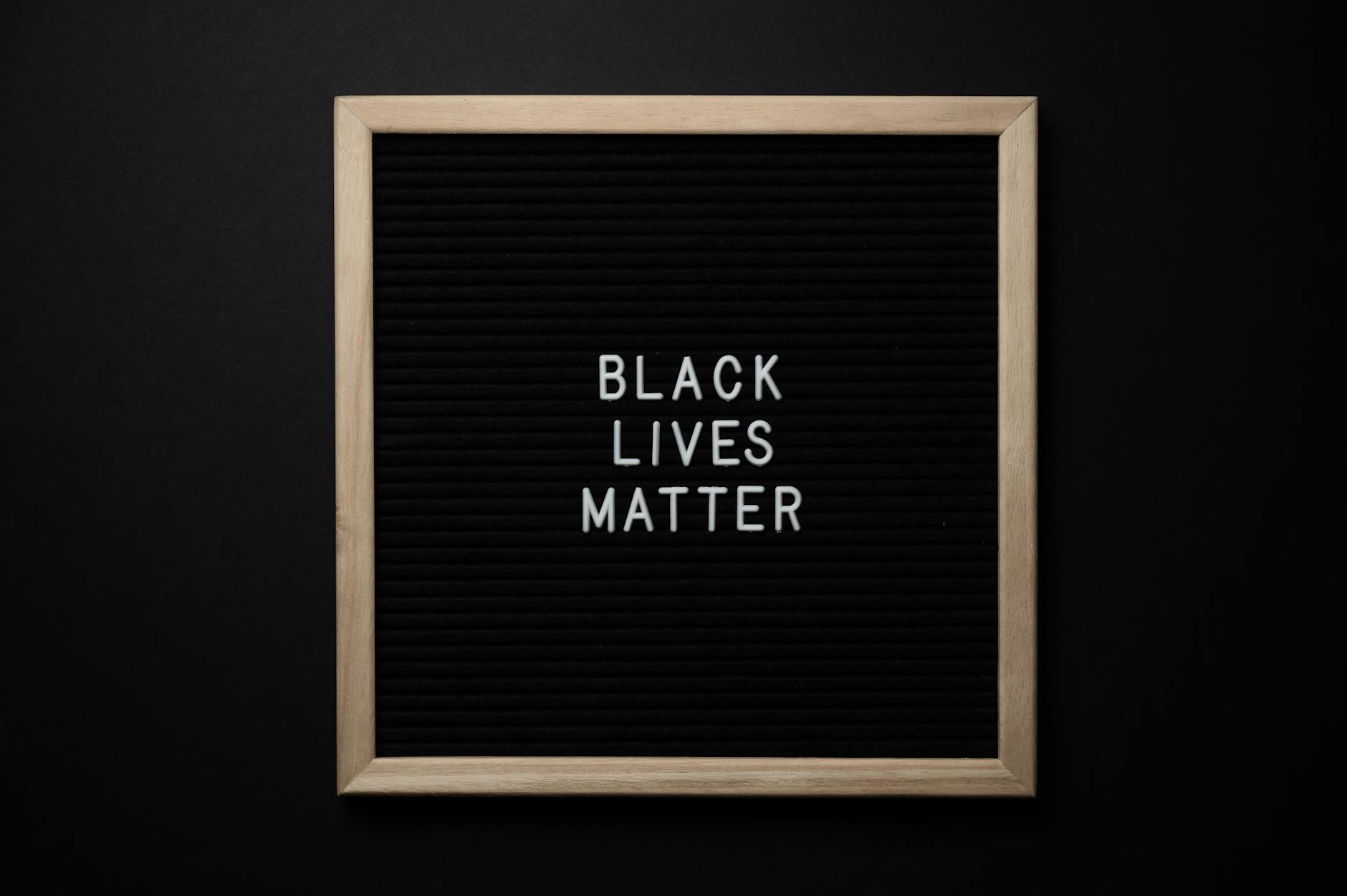
    Black Lives Matter in white text on black background in a lighter frame on a black background. Photo by Brett Sayles via Pexels.com
    Photo by Brett Sayles on Pexels.com

    I had promised to begin laying out the pathway for Reintegration in this update, beginning with a basic explanation of what it means for Better Life to be a FCRP (Faith Community Integration Project), but I want to hit pause on that for a moment to reflect on the historical moment we’re currently witnessing.

    I’ll begin by acknowledging that I grew up white and privileged in Vancouver, BC, Canada, and I have no firsthand understanding of what African Americans are experiencing, nor of the racial injustices other people in North America experience.

    Over the past weeks, I’ve realized I need to listen and have a posture of recognizing not only just how much I don’t understand, but that if I don’t understand, I can’t take meaningful action—which, ultimately, is what I want to do.


    Here are some of the valuable voices that have guided me to that realization and helped me start to listen and learn:

    1. Dr. Clint Smith, an African American writer, teacher, and researcher, speaking in this TED radio podcast episode
    2. A number of books, including:
      1. The Warmth of Other Suns: The Epic Story of America’s Great Migration by Isabel Wilkerson
      2. The Myth of Equality: Uncovering the Roots of Injustice and Privilege by Ken Wytsma
      3. How to Be an Antiracist by Ibram X. Kendi
      4. White Fragility: Why It’s So Hard for White People to Talk About Racism by Robin DiAngelo
      5. The Color of Law: A Forgotten History of How Our Government Segregated America by Richard Rothstein
      6. Between the World and Me by Ta-Nehisi Coates
    3. And “How to Make this Moment the Turning Point for Real Change” by Barak Obama on Medium

    Now, you may be asking why I’m sharing resources and dedicating this edition to #blacklivesmatter. Here’s my motive:

    Better Life Integration & Support Society is all about justice.

    Not the limited view of justice that calls for exacting “an eye for an eye,” but true justice that recognizes the immeasurable worth of every human being.

    The work of Better Life—the vocation, even—is all about supporting true justice and, most significantly, justice within the practice of faith.

    Let me be clear: Better Life exists to help people from all faith backgrounds find community within their faith community.

    But at the same time, I practice, communicate, and lead out of my faith as a devoted follower of Jesus. And this is what’s so significant for me when it comes to our current cultural reality. It’s what has far-reaching influence on the work we do with men and women and faith communities as Better Life.

    It’s as simple and complex as this: Jesus—who from the Christian perspective is the Son of God come into the world to suffer and die for humankind so that, in and through Him, we can experience the love, forgiveness, and grace of God—said:

    For even the Son of Man came not to be served but to serve others and to give his life as a ransom for many.” (Matthew 20:28)

    Injustice is rampant in so many parts of our world, and the atrocities that have been committed against African Americans in the United States just over the past few weeks alone have been heart wrenching.

    I want to be a part of the solution. Better Life wants to be a part of the solution, as we help men and women who have been incarcerated to experience being a productive and contributing member of their community.

    I definitely don’t have all the answers, other than to say: Jesus gives us a model, a way to listen, and a way to love, a way to engage with everyone around us.

    I recommit myself, along with our chaplains at Better Life, to continue to engage with others—all others, inclusive of every race, sex, and faith background—from a posture of serving, as we continue to listen and learn from their experiences.

    And, particularly in this moment, I want to affirm that Black Lives Matter.

    Sincerely,

    Adam Wiggins

    General Director | Lead Chaplain

  • Dreaming for a Renewed Life—Bob Goff at San Quentin

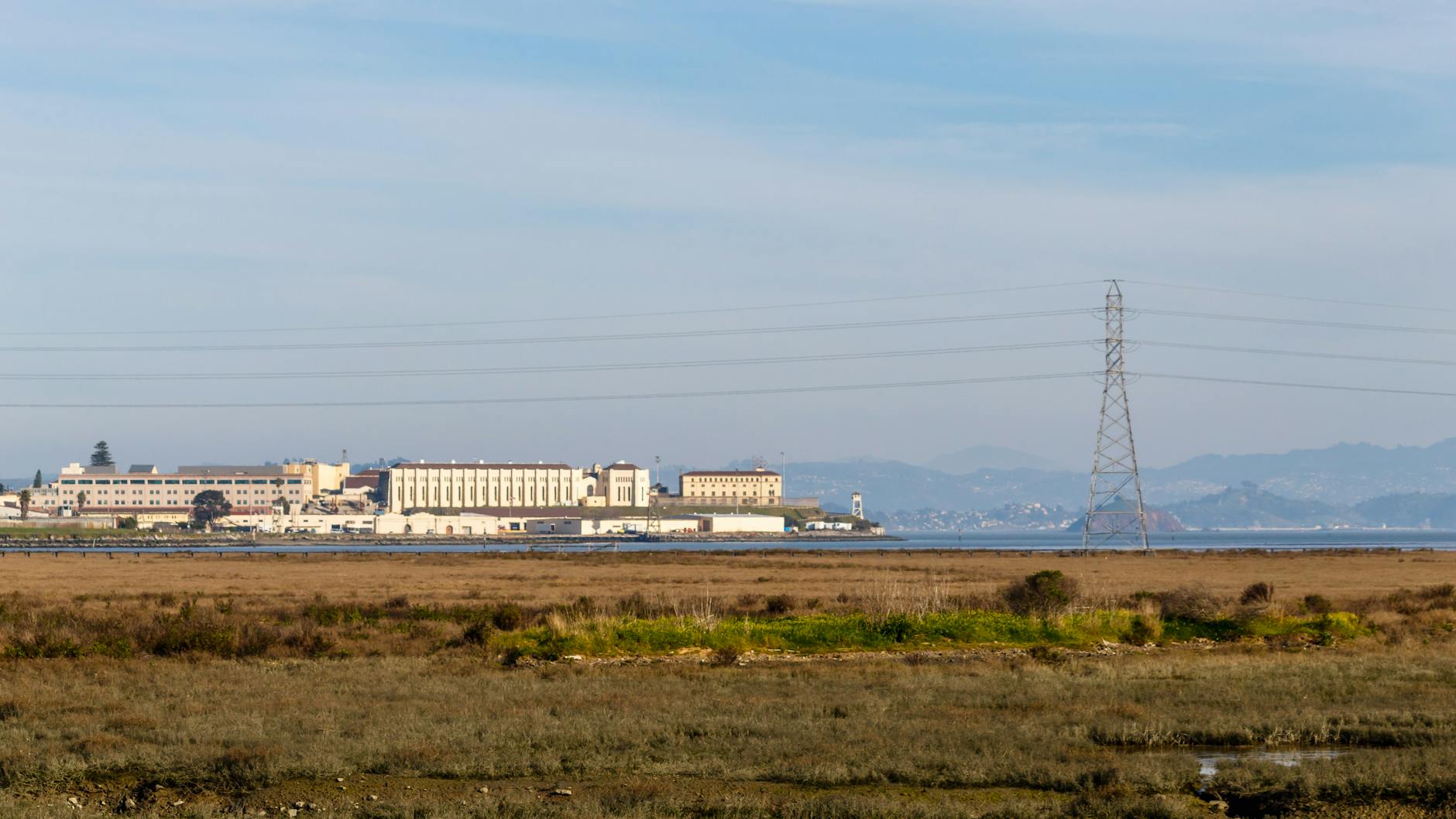
    Photo by Robert So on Pexels.com

    For the past year, Bob and friends have been regularly visiting the inmates at San Quentin State Prison just north of San Francisco. Although the context is for Bob to teach a modified Dream Big workshop, the inmates have been the real teachers. They are living examples of grace, redemption, respect, and the courage to dream again.

    Maybe you find yourself stuck in the circumstances of your life. Listen in to this thoughtful conversation between Bob Goff and Kevin (a.k.a. ‘Special Kay’), Vincent, and Brandon and be inspired by the courage of the inmates to dream for a new life. 

    Listen to the podcast here.