Tag: jesus

  • Astrid’s Story: Reintegration After Release & Deportation

    Today we’re bringing you the remarkable first chapter of Astrid’s story, written six years into her reintegration process in Germany:

    Getting released from Fraser Valley Institution for Women almost six years ago felt like kind of being reborn.

    Being on the inside, I never felt I had been held captive in darkness and now was going to see and be blinded by the light, not at all. I had just simply gotten used to this artificial security. After 12 years, inside became a safe place. I had found solace in knowing the ropes.

    This truth was revealed one morning, in my ninth year, when my superficial greeting of “How are you?” to another woman got a sarcastic, “Oh couldn’t be better, I am living my dream!” in response.

    Sure, no one finding themselves inside the barbwire is living their dream, but to me, at that moment in time, it felt I was.

    How could that be? I had found what I couldn’t in this big wide world outside of the fence; a place I felt secure, a place that did feel like home. Inside, away from the luring haste of life, I came to moments of being home in this temple, my body, in which God lives.

    Meeting the parole board in September 2015, I had the chance of release—and with release, a ticket to freedom to a country I had not lived in almost 20 years, where I would not be supervised by any governmental body.

    I was not anticipating this day with joy and excitement, but rather with fear. Fear of giving up my safe place. Life on the inside for the past 12 years had come easy to me, ever since the first serious advice from the Institutional Parole Officer: “You are not here to make friends!”

    As a woman in her mid-thirties with a past of broken and troubled relationships, not knowing what a healthy relationship was or could feel like, I was only relieved not to have to engage in any of it anymore. This was the first big relief. Keeping to myself made flying under the radar in jail easy and not having to be with others left time for me to be with me.

    Prior to committing murder, I led a highly functional lifestyle. I was drug and alcohol-free, but unaware of having been caught up in the addiction of codependency and busyness to avoid being human.

    Being far away from God and myself led me to go astray not only spiritually, but also emotionally and mentally. I ended up spiralling in a vicious cycle of taking flight in suicidal thoughts that ended in committing murder. A truth so hurtful and so shameful.

    WHY?! This one word, this one question was the only word left to mutter in my heart and my head. Why did I rebel against God? Did I want to prove to God that I was unlovable??

    There was no reprieve, nor answers in psychology reports. The “whys” and “how coulds” just echoed inside my head, mingling with labels and confusion.

    “Be still and know that I am God.” (Psalm 46:10)

    That first hour inside a dark holding cell, stillness spoke love to me in a whisper so gentle and soothing that I felt held, not by walls I could not see, but by a divine strength. Years later I found out that is the meaning of the name given to me by my parents, Astrid, “divine strength.”

    Twelve years later, having been held by God’s grace like a fledgling in a nest, it was too scary to face freedom in a country I had not lived in for twenty years and meet my family who I had hurt. But God made clear it was time to fly and fly towards home.

    Facing my family was hard, and after so many years I felt so divided. The longing to belong was greater than ever, but with the pain I had inflicted, I felt our distance had grown and acceptance was unreachable. I knew and felt that they could not be there for me and that I had become a burden. This was nothing new to me. I had felt and known this before. Once again, I had to look out for myself, or so I believed.

    As a baby I had been received by a midwife. Now at age 47 I was praying to God for a mid-sister. Grace stepped in a wondrous way into this role—unexpected! Just like God does it—creatively and with perfect timing.

    I met Grace in the summer, three months before my parole board hearing. She stepped in as chaplain because our chaplain had gone on vacation. Grace led the worship service for us women inside and she approached me after conducting the service. She recognized my accent, as her husband is German. So, we connected and whenever she came in, we chatted about our experiences living in Germany. She shared her joy in raising three children, then teenagers, in two cultures, while I shared my concerns in returning to a culture I felt detached from and a family past I did not know how to engage in, yet nevertheless needed to mend.

    Not only did God provide Grace for me to go home to my home country with (strange coincidence or God’s plan, but we both arrived back in Germany around the same time), but God revealed himself in the welcoming hugs and the gift of home. A dear friend from school and her husband picked me up from the airport and received me back into this society that I feared. They delivered me to the town of Celle, a town I had never lived in; a town of civil servants, home to three courts and one jail for men, but also a town where the Christian restorative ministry of the Schwarze Kreuz (“Black Cross”) had its office.

    This ministry had vouched for me in the reintegration process. Making an exception, they offered me their little guest room, the size of the prison cell, helped me with bureaucratic processes, in meeting volunteers, in settling, and they gave me time to make independent steps towards finding my own place and work.

    After six months, I found work in the field I had been trained in 25 years earlier. After nine months, I found an apartment in a timbered framed house from the 1600s in the middle of the dainty and ancient town center. Nine months after starting work as a furniture maker in a shop, I felt relieved in getting laid-off. My mental state had deteriorated under ongoing fear and anxiety, making concentrated working impossible. The employment counsellor was kind and patient, realizing I was putting too much pressure on myself with unrealistic expectations.

    I was held back from applying for jobs, but he offered me a work program called a “1 Euro Job.” Literally, for each hour of work, I earned one Euro. Since I had not picked up on the negative stigma that this program held, I went for it like a relieved greenhorn and I got sent to the church just around the corner from where I lived. I sought out the sexton of that church and was put to work 20 hours a week in assisting the sexton in cleaning and maintenance work. For two years I was on social assistance working at a 1 Euro Job while growing in Christ and building relationships.

    During the years inside, I had not missed much from this free world, but I had missed hearing live music in real life time and space. While hanging out in front of the radio listening to CBC Radio Two, I repeatedly prayed “God, please let me hear music again, real music in the moment of time where it is been created.”

    This longing was fulfilled on the second day of my 1 Euro Job. It was early morning prior to the church opening. I was cleaning the empty sanctuary when the music director came in and rehearsed at the large organ hovering above the balcony. There I stood, in awe, with the vacuum cleaner in my hands and tears in my eyes, muttering, “thank you, God, thank you.”

    Over the years, people have asked me, “What was the hardest after getting released?” It has been these moments of joyful surprises revealing God has heard me, sees me, and wants me to know he is with me at all times and in all ways. This realization is still hard for me to wrap my heart and soul around.

    Another realization that hit me hard was the meaning of counting—being counted. In jail, the “headcount” held the highest meaning for staff and women, thus we all had to abide by its reoccurring importance. For everyone—the counter, as well as the one counted—this was a challenge to accept. I fought it in the strangest internal ways, repeatedly, until this one day when I learned of the saying, “count your blessings.” It has transformed the meaning of the ‘head-count’ for me to that of a blessing. It became a divine act. God himself was counting us worthy. I was counted worthy by God to belong to him.

    On my first train ride—common transportation in Germany, both reliable and affordable—I had seated myself in an area for a group of four passengers. To my surprise, a four-year-old boy plopped himself in front of me, looked at me and counted proudly in German, eins, zwei, drei… when into the second digit his mother and older brother joined him and me. There I was, part of a family, joining the child in front of me in counting. He counted out loud to me vigorously, only to interrupt to let me know he could count till one hundred, preparing me for what was to come.

    I gave him all my attention, feeling blessed by being counted to and not counted as a number. Those blessed moments made me tear up, and they were the moments I had to process and learn to receive as worthy of.

    On the first Sunday after release, I went to the church nearest to my new home, the Schwarze Kreuz. It was Thanksgiving Sunday, and after the pastor released us with a blessing, he invited the congregation to a soup afterwards at a sister church within walking distance. I did ask one woman outside where the lunch would take place, but she was unsure and could only give me the rough direction.

    I was not just hungry for food; I was hungrier to find a parish. So, I cycled in the direction the woman had pointed out, trusting I would and could find what I was looking for. Churches in Germany usually come with belfries, so I kept looking for one while cycling. Becoming unsure, I gave up looking and turned away from that direction to find my way back home.

    As I cycled by an old, run-down building, I saw people gathered through the windows. Could this be a congregation? I went to the entrance and walked shyly into a slimming crowd. Asking at the counter if I could still drink tea, I was invited to help myself. At an empty table I sat down, and a woman greeted me with warmth and asked if she could sit with me. We chatted and she confirmed the church worshipped together every Sunday at eleven.

    This became my church and today this congregation is my spiritual base. Every summer my church goes on a retreat, and at the second retreat I was able to attend, I got baptized.


    Astrid's baptism in Germany.
  • Referrals & Reintegration Partners

    In FCRP Part 2, we mentioned that there can be other reintegration pathways better suited to the particular needs of an individual, and when anotherorganization can provide a better match of resources and support, we’re happy to make referrals. For example:

    Circles of Support and Accountability (CoSA)

    CoSA is a unique and innovative community justice initiative for post release support and accountability of offenders in and by the community. CoSA VFV also provides public education programming on how to create safe communities for all.

    Better Life refers individuals to CoSA when they require support and accountability related to sexual crimes. Visit the CoSA Vancouver/Fraser Valley website for more details.

    Archdiocese of Vancouver Prison Ministry

    We care for all those that have been impacted by crime. We regularly visit our community’s correctional institutions, providing faith-based programs. We also engage our Catholic schools and parishes, promoting awareness about social teaching and restorative justice.

    Better Life refers individuals to Catholic Vancouver Prison Ministry who prefer a Catholic faith community or who can otherwise benefit from the strong support and resources they offer. Visit the Catholic Vancouver Prison Ministry website for more details.

  • Better Life on Video

    We’ve got something a little different for you this week.

    Due to the realities of the COVID-19 pandemic, we will not be proceeding with our usual Vision Night and live fundraising events this autumn.

    As the next best thing, we’ve prepared this video to highlight Better Life’s work, vision, and invitation.

    Please take a few minutes to watch, and consider sharing it with your church or network:

    (Use the [cc] icon to turn on subtitles.)

    Download a standard (500MB) or high resolution (5GB) copy to share at your church or organization.

  • TH’s Story

    One of the things I love about working with Better Life Integration and Support is having a front row seat to the amazing stories of our care recipients. Viewing God at work in an individual’s life in such radical and transformative ways is such a privilege.

    This month, I’ve been looking forward to sharing TH’s remarkable story with you.

    But first, some background: Better Life works with Federal Corrections, so every offender we serve has a sentence of over two years because of the severity of their crimes. (Sentences of under two years fall under provincial corrections.)

    While in prison for his serious crime, TH had a radical and life-changing encounter with Jesus. It’s important to note that it wasn’t some mystical experience that came about in isolation, but rather was supported by the actions of some very key people. The Institutional/Site Chaplain and volunteers had a significant, invaluable role in engaging with TH—and through their engagement and example, TH encountered Jesus.

    To pause for a moment in TH’s story, this is why the role of volunteers within Corrections Institutions, working alongside Site Chaplains, is so invaluable.

    We’re incredibly grateful for the volunteers who work alongside the Site Chaplains to facilitate training such as Alpha, Purpose Driven Life, and Jim Putnam’s Real-Life Discipleship (“reproducible” discipleship, where a disciple is defined as someone who is discipling others.)

    All of the above influences were instrumental in supporting and leading the way to the experience that TH had with Jesus. But, their impact is also exemplified in what TH decided to do next.

    TH recommitted his life to Jesus and was baptized while in prison, and then, recognizing the value of what he had experienced, began discipling other offenders and helping them to find and follow Jesus.

    The influence of what Jesus has been doing in TH’s life since is almost immeasurable. TH has had the privilege of baptizing three other offenders who came to Jesus and were being discipled. 70 other offenders came out to witness it!

    In a prison culture that often can lean towards cynicism and despair, the example of TH and the others who have come to know Jesus has been far-reaching in multiple ways.

    First, while TH, now out of prison, is in a halfway house, employed, and rapidly moving towards being released from his ‘warrant,’ he continues to recognize that God’s purpose for his life is to invest back into others.

    TH recently shared with one of our Better Life chaplains how he has been struggling with painful areas in his life. During their time together, our chaplain received a phone call from an offender still with prison. TH was able to talk with this other man and encourage him in his faith, and what it means to continue to trust in and follow Jesus, especially through the restrictions of COVID-19.

    But—and this is so significant—TH not only provided support for another, through the phone conversation he gained perspective and clarity about his own situation, re-affirming God’s purpose for his life!

    As the restrictions of COVID-19 continue to ease, Better Life hopes to be able to hold several Vision Nights this fall in various locations (tentatively: Abbotsford, Chilliwack, Victoria).

    TH is going to be the featured speaker during these nights to help all of us envision how to be engaged in this valuable work of healthy reintegration!

    Please keep an eye on our newsletter or the events space on our website for updates as to when and where Better Life Vision Nights will be taking place. We hope you can join us!

    On behalf of our amazing team at Better Life Integration & Support,

    Adam Wiggins

    General Director

  • Faith Community Reintegration 101

    Over the past weeks, I have had many encouraging conversations with individuals and churches about the work of Better Life Integration and Support.

    I’m relatively new to the position of General Director/Lead Chaplain with Better Life and so, like many of you, I am just beginning to discover what the work of Better Life is all about—and what a game-changer it can be for men and women in a Federal Corrections Institute as they come up for parole and look to integrate back into the community. (Federal sentences in Canada are sentences of two years plus a day; otherwise, offenders go into Provincial Institutions.)

    Before I begin defining Faith Community Reintegration Projects (FCRP), I want to provide a brief history:

    Better Life was formed in the early 2000s and motivated by the significant difference helping parolees within the context of a faith community makes.

    Initially, Better Life functioned under Corrections Canada as a Community Chaplaincy, which involves supporting and helping parolees in halfway homes and in the community experience healthy reintegration. This also involves the valuable work of supporting the families of men and women who were incarcerated.

    Many former offenders and their families experienced the care and support of Better Life’s lead chaplain Pascal Bergeron and the team of chaplains who served with him over the years. However, in a summary of the work of Community Chaplaincy, it was noted that the number of parolees to one chaplain was 1000:1 in the greater Toronto area and 650:1 in Metro Vancouver.

    In response to this overwhelming ratio of parolees to chaplains, FCRP’s (Faith Community Reintegration Projects) were developed by Corrections Canada (CSC).

    Rustic bridge across a cascade in a wooded canyon.

    Better Life has the FCRP contract for the Pacific Region (in effect to 2025), which includes Vancouver/Fraser Valley and Victoria/Vancouver Island. There are nine Federal Corrections Institutes in the Region:

    • Fraser Valley Institute (The Only Women’s Facility | Abbotsford)
    • Kent (Maximum Security | Agassiz)
    • Kwikwexwelhp Healing Village (Harrison Mills)
    • Matsqui Institution (Medium Security | Abbotsford)
    • Mission Institutions (2: Minimum & Medium | Mission)
    • Mountain Institution (Medium | Agassiz)
    • Pacific Institution/Regional Treatment Centre (Addiction & Psychiatric Centre | Abbotsford)
    • William Head Institution (Minimum Security | Victoria)

    FCRPs offer a couple of significant benefits:

    Firstly, there is a significant reduction in recidivism when a parolee is connected with a faith community.

    The statistic I’ve heard most often is that a parolee has a 70% likelihood of reoffending (recidivism) if they are not connected with a faith community.

    That’s obviously a huge motivation for connecting offenders of faith to a faith community on their release from prison!

    Secondly—and closely connected—is the importance of the faith community in the healthy reintegration of a parolee.

    In other words, while Better Life Chaplains and other FCRP Chaplains all across Canada work actively to provide care and support to men and women who request it within a variety of different contexts and phases of their experience, the contractually mandated work of Better Life and related organizations is specifically to provide a “bridge” from an offender’s time in a Corrections Institution to a faith community.

    A faith community that welcomes and provides a growth pathway and mentorship for a parolee is the best environment that a parolee can experience for healthy reintegration back into their community and toward become a contributing member of their community.

    Better Life as an organization has a fantastic team of chaplains and volunteers who invest deeply in the men and women who reach out to us looking to connect with a faith community as they come out of the corrections institution on parole. We also extend care to the families of offenders who often feel lost and alone during their loved one’s incarceration.

    But also—and in many respects, more significantly—we partner with local faith communities who are committed, and even have a sense of calling, to provide a place of welcome, safety, and growth for a parolee, knowing that the environment they provide is a game-changer when it comes to healthy reintegration back into the community.

    In Part 2 of Faith Community Reintegration, we’ll look at where the process of engagement begins, and what the significant steps of the process are, including how volunteers can become involved inside the institution and help build that “bridge” of reintegration from the institution to their faith community.

  • Prayer & Powerful Stories

    Dear Friends of Better Life,

    Our goal is for the content we share with you to be as meaningful and valuable as possible.

    As mentioned previously, we want to use this space to develop and communicate the pathway Better Life supports men and women on as they move from eligibility for parole to integration into a faith community.

    But at the same time, we recognize the importance of stories.

    We recently shared some stories of transformation in the lives of men and women coming out of incarceration with the local church they have connected to—remotely via Zoom, of course—and many of the staff were brought to tears. God is clearly at work, and what He is doing in the lives of men and women both within the Corrections Institutions and out on parole is awesome!

    So we’re going to start weaving in more storytelling into our content calendar, alternating between highlighting various aspects of the process of reintegration and practical resources, and sharing the powerful stories of our men and women.

    I also want to invite you to sign up as one of our prayer partners. Reintegration can be challenging.

    We would love to have you praying with us for the men and women coming out of Corrections and practical needs and challenges they face.

    Email us at prayerforbetterlife@gmail.com to join the list and get regular monthly and as-needed urgent prayer requests.


    If you are a part of a faith community or ministry team already supporting an individual who is incarcerated or paroled, please email us prayer requests at prayerforbetterlife@gmail.com so we can pass those along to our prayer partners on a monthly basis. (Please write “urgent” in the subject line if it’s time-sensitive so we know to share it right away!)

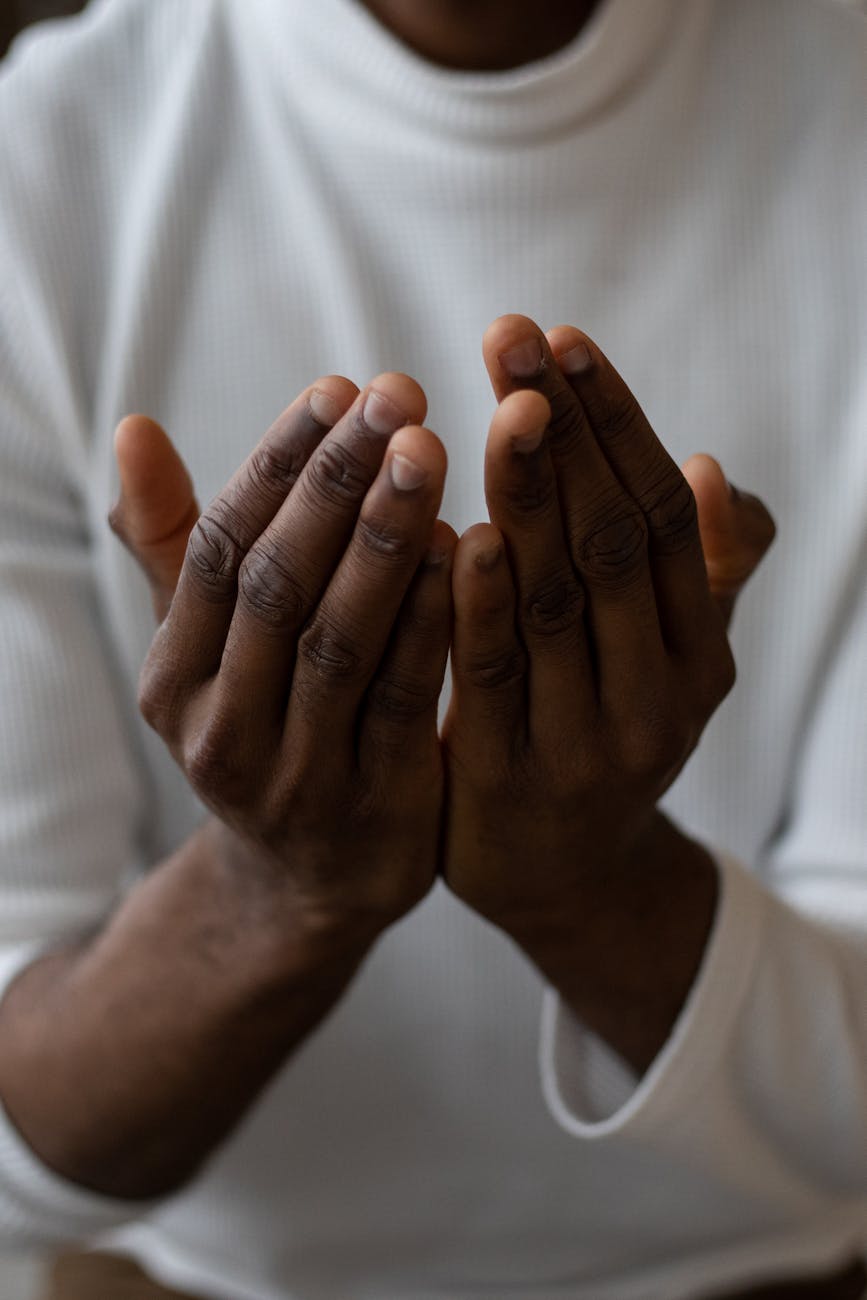
    prayer, torso of a shadowed figure in a white top with upraised hands
    Photo by Monstera Production on Pexels.com


    Today we’re sharing the story of one of our care recipients.

    YC had been doing well for a number of years after a significant time of incarceration. He is married and is meaningfully employed.

    However, like with many the men and women we support, the COVID-19 pandemic, with all of its many changes and challenges, has had a significant impact on his well being.

    YC recently violated a condition of his parole and was in lock-up for 48 hours—but came to a powerful understanding through his difficult experience.

    He wrote his support network these words:

    Dear friends,

    I am writing this letter because I have been struggling very much in the last few months. My stressors have been building up and I have been having difficulties dealings with all of this.

    I was locked up at the Chilliwack RCMP detachment for 48 hours on Easter Sunday. I was released on the following Tuesday. I was detained because of a breach on my parole conditions.

    On Easter Saturday, feeling really depressed and overwhelmed with a lot of the stressors in my life, I went to visit a friend and started to feel really depressed. I started to drink one beer after another. After a couple I thought that I might as well keep drinking because I realized that I have already (messed) up, one or twelve doesn’t make a difference on (messing) up. I didn’t want to risk driving my vehicle anywhere, especially under the influence. I haven’t drank for so many years and not having had anything to eat all day, the drinking really hit me hard. I ended up sleeping there on their couch.

    There was also very poor cell reception, so that I didn’t communicate at all with my (wife). (My wife) was extremely concerned about my whereabouts, she didn’t know if I had committed suicide, ran off the road and was laying at the bottom of a ditch or ravine somewhere. What I have done was extremely selfish and irresponsible. My bad choice of actions that Easter Saturday with dealing with my stressors and depression was out of character for me. I am truly sorry for having put (my wife), her family and all of my support group through hell by not having been able to deal with this in a better way.

    It is too simple to say that this proves that I am only human, but no, I should have known better. This incident has made me realized that one of the contributing factors for this shortcoming is that I have been trying to deal with some issues by myself. In the last few years I have been distancing myself from my support group that I have built over the years.

    I have now realized that I have the need to reconnect and tighten my support group. Realizing that I can’t do this on my own, I can’t deal with all my stressors all at once. I can deal with those stressors when they are one at the time, but when I let them pile up I get extremely overwhelmed and my depression goes into overdrive. Unfortunately, I have a difficult time opening up and sharing my weaknesses because I don’t want to burden anyone. That’s the reason that my response to “How are you?” is usually “fine.”

    So I am reaching out to all of you, in the hope that I haven’t lost your friendships, trust, love and support. I am truly sorry if I have let anyone of you down. I’m so grateful to have my dear wife by my side to support me through these difficult times, but my wife cannot be my only support, because of my history, this is way too much for even her to handle. That is the reason why I need to reconnect with all of you.

    Please pray for YC. His story represents the very real challenges of reintegration, as well as the game-changer having a supportive faith community can be in the lives of the men and women we care for.